
identity theft guide
Dark-Web Alerts Explained: What Those Credential Dumps Actually Mean
 Sam Okonkwo· Security Researcher· Updated August 27, 2026· 15 min read
Some links on this page may earn GUIDEORA a commission. Disclosure

Quick take
Dark-web monitoring watches sources a vendor buys or crawls for emails, passwords, Social Security numbers, and similar identifiers. An alert means that string showed up in a dataset they can see. It does not mean a thief already opened a card in your name, and a silent app does not mean you were never leaked. Change reused passwords, freeze credit files if new-account friction matters, and use IdentityTheft.gov if money already moved. Household monitoring bundles — Aura is the example this site uses — can nag you when a new dump appears. They cannot un-leak the internet.

A dump is a file, not a biography
Someone's database leaked. A criminal forum, a paste site, a 'combo list' of email-and-password pairs, a set of Social Security numbers sold as a spreadsheet. That is a dump. Your name in it usually means a company you used was breached years ago, a reused password was harvested, or an identifier was copied from a public record. It does not, by itself, mean a new credit card is already in the mail. The useful question is which replay is now easy: logging into an old account, guessing a bank login that shared that password, or applying for credit with a stolen SSN.
Marketing language turns that file into a horror movie. The file is boring. The replay is what hurts. A monitoring product is a search engine over those files, not a time machine.
From the record
An alert is a string match. A freeze is friction on new credit. A police report is for crime that already happened. Keep those three jobs from collapsing into one red badge.
GUIDEORA rule for dump alerts
String match
What most dark-web pings actually are
Not a freeze
A dump does not lock bureaus for you
Not 911
An app alert is not a crime report
What scanners can see — and the ocean they cannot
Vendors buy feeds, crawl paste sites, and partner with threat-intel shops. They look for your email, phone, SSN, and sometimes medical or driver's-license patterns. They see the sources they paid for. Private chats, closed markets, a dump that has not been indexed yet, a leak sitting on a laptop — those are outside the product. A quiet dashboard can mean you are lucky. It can also mean the scanner has not met that file yet.
Speed claims ('we found it faster than X') are vendor research, not a GUIDEORA lab certificate. Fast is useful if you will change the password the same afternoon. Fast is decoration if you swipe the notification away.
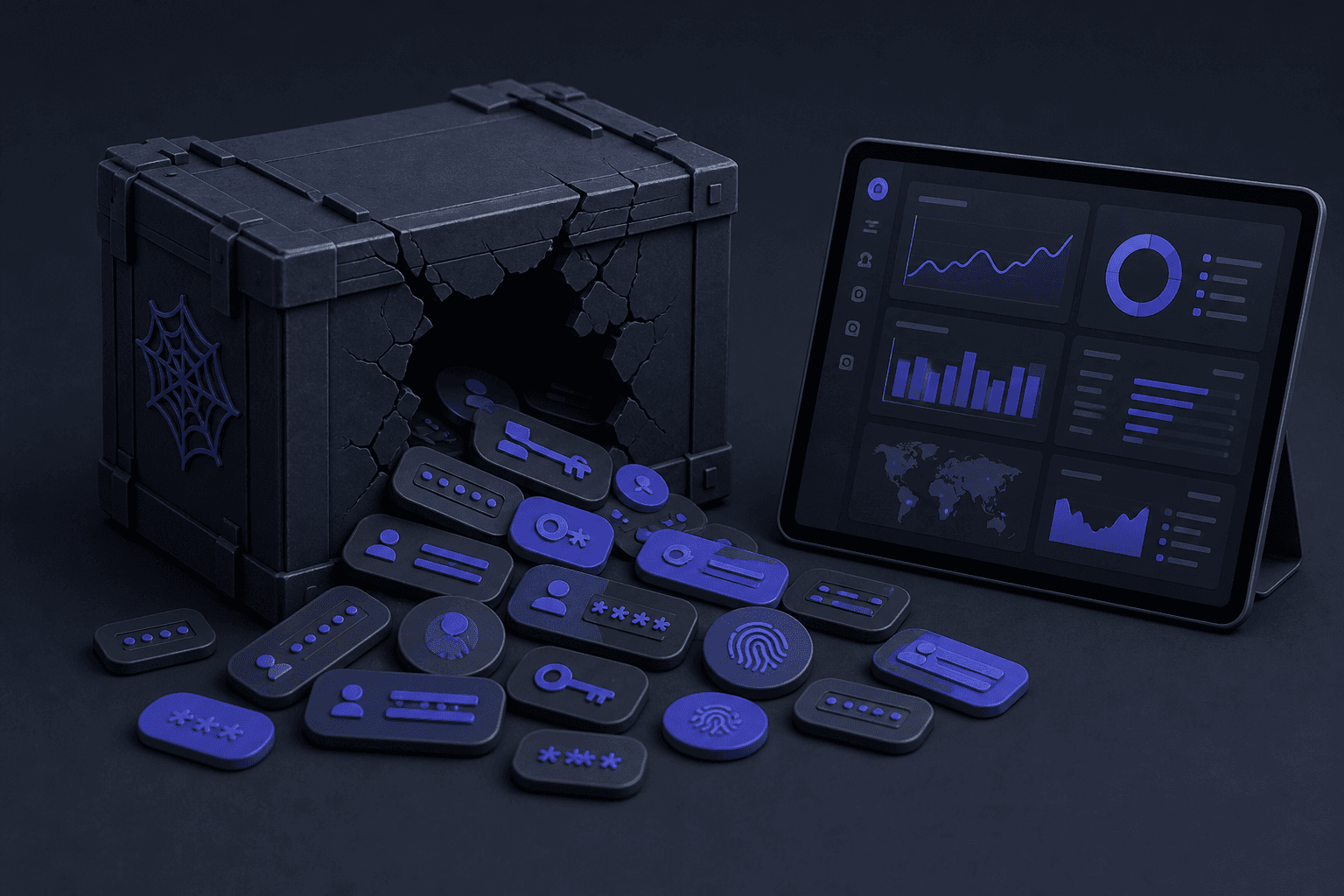
Dump alert
A string, not a verdict
Sources
Only what they crawl
Password replay
Change reused logins
New credit
Freeze is separate
Staffed help
After money moves
The checklist after a ping
- Change that password, and every account that shared it. A manager makes this survivable.
- Turn on a second factor that is not SMS if the site offers an authenticator or a passkey.
- If the dump included an SSN or the alert looks like new credit, pull official files at AnnualCreditReport.com and consider a freeze at Equifax, Experian, and TransUnion.
- If money moved or a tax refund vanished, start at IdentityTheft.gov. An app is not a police report.
- An IRS identity-protection PIN is a tax-refund tool. Monitoring does not install it for you.
Silence is not a certificate
People buy monitoring because they want the absence of alerts to mean they are safe. That is not what the product measures. It measures matches in visible dumps. Account takeover on a site that never leaked into those feeds will not ping. A synthetic identity built slowly on a child's SSN may not look like 'your' email dump. Buy the nag. Do not buy the myth that a green badge is a force field.
Where a household bundle earns the bill
A dedicated dark-web search you run once a year is a homework assignment you will skip. A dashboard that pings on a Tuesday is ops. Aura is the household-bundle example this site uses: as they currently document it, dark-web and identifier watching sits next to three-bureau credit-file alerts, Experian Credit Lock, title monitoring, U.S.-based restoration specialists, and extras (VPN, antivirus, a password manager) you should only count if you will open them. Individual is listed around $12/month billed annually; Couple and Family scale seats. They currently advertise a 14-day trial and a 60-day money-back window on annual plans. Insurance-style dollar figures on those SKUs have caps, exclusions, and claim rules — confirm them on Aura's terms. Checkout always wins.
What a dump alert can and cannot do — editorial, not a lab test.
| Job | Dump alert | Still your job |
|---|---|---|
| Reused password | Tells you the string leaked | Change it everywhere it was reused |
| New credit in your name | May not fire at all | Freeze at three bureaus |
| Money already gone | A clue, not a case file | IdentityTheft.gov + banks |
| Next Tuesday's leak | Why people pay for a crawler | You still have to act on the ping |
Pros
- +A Tuesday ping beats discovering a dump on a yearly report
- +Bundles that also watch credit inquiries catch a different theft than password dumps
- +Restoration staff is useful after money moved — if you will actually call
Cons
- −Scanners only see sources they buy or crawl
- −A quiet dashboard is not proof you were never leaked
- −Insurance-style language is a claim process, not cash in the app
Buy the reminder, keep the freeze
If you reuse passwords, fix that first — the dump is already out there. If you want someone else to watch the next file, a monitoring bundle is the product. Aura is the staffed household example this site features. Pair it with unique passwords and, if new-account friction matters, a freeze you place yourself. GUIDEORA does not crawl the dark web and will not tell you that a green badge means you are done.
Editor take

Hear about the dump. Then do the boring work.
Use dark-web alerts as a reminder to rotate reused passwords and to check whether new credit needs a freeze. A household bundle like Aura currently watches dumps alongside three-bureau inquiries and can put a U.S. specialist on the line if something looks like fraud. Do not skip IdentityTheft.gov because an app badge said you were already protected. GUIDEORA is not the scanner and not the vendor.