
family safety guide
Why Families Still Text 'Are you home?' — and What Arrival Alerts Change
 Jordan Hale· Privacy Editor· Updated August 27, 2026· 14 min read
Some links on this page may earn GUIDEORA a commission. Disclosure

Quick take
Families text 'are you home?' because the alternative used to be guessing. An arrival alert is a place-based ping when someone you already share with reaches a labeled location — home, school, a workplace. It can retire the same question. It cannot prove someone is safe, and it should not be installed as covert tracking. HeyPolo is the consent-based example this guide uses: exact, general-area, or private mode, with time-limited or repeating sharing as currently documented. Checkout always wins on price.

Why families still live in the check-in thread
The phrase is short because the fear is not. Are you home? means the drive ended, the door opened, the evening can start. Parents send it after a late shift. Partners send it after a highway. Teenagers send it when they said they would and the clock disagrees. The group chat becomes a cheap operations center: timestamps, blue ticks, a screenshot of a maps pin when someone is tired of typing. The thread is not clinginess. It is a household trying to close a loop the phone never closed for them.
Text check-ins fail in boring ways. The person is parking and does not look down. The phone is on silent in a bag. The reply comes twenty minutes later and everyone has already invented a story. Then the next night the same question goes out again, because there is no system — only a habit. Location sharing is the product category that grew up around that habit. Most of the category is louder than it needs to be. Arrival alerts are the narrow job: tell the people who were invited when a labeled place is reached.
From the record
A check-in is a closed loop. A live map is a feed. Buy the loop if that is what you wanted. Do not buy the feed because an ad made silence look dangerous.
GUIDEORA rule for family arrival tools
2 places
Home plus one other is usually enough
Consent
Share only with people who agreed
Not 911
An alert is not emergency dispatch
What an arrival alert actually is
An arrival alert is not a biography of someone's day. It is a geofence with a name: when a device that is already sharing crosses into (or out of) a place you labeled, the other people on that share get a notification. Home. School. A clinic. A workplace parking lot. The useful ones are places the household already talks about. The useless ones are every grocery store on the commute.
The alert can only fire if the phone is on, located, and still sharing. GPS is messy at the edge of a building. Wi-Fi assist helps indoors and still lies sometimes. A ping that says 'arrived' five minutes after someone walked in is still more useful than a text that never got sent. A ping that never comes is a device and radio problem until you have a reason to think otherwise.
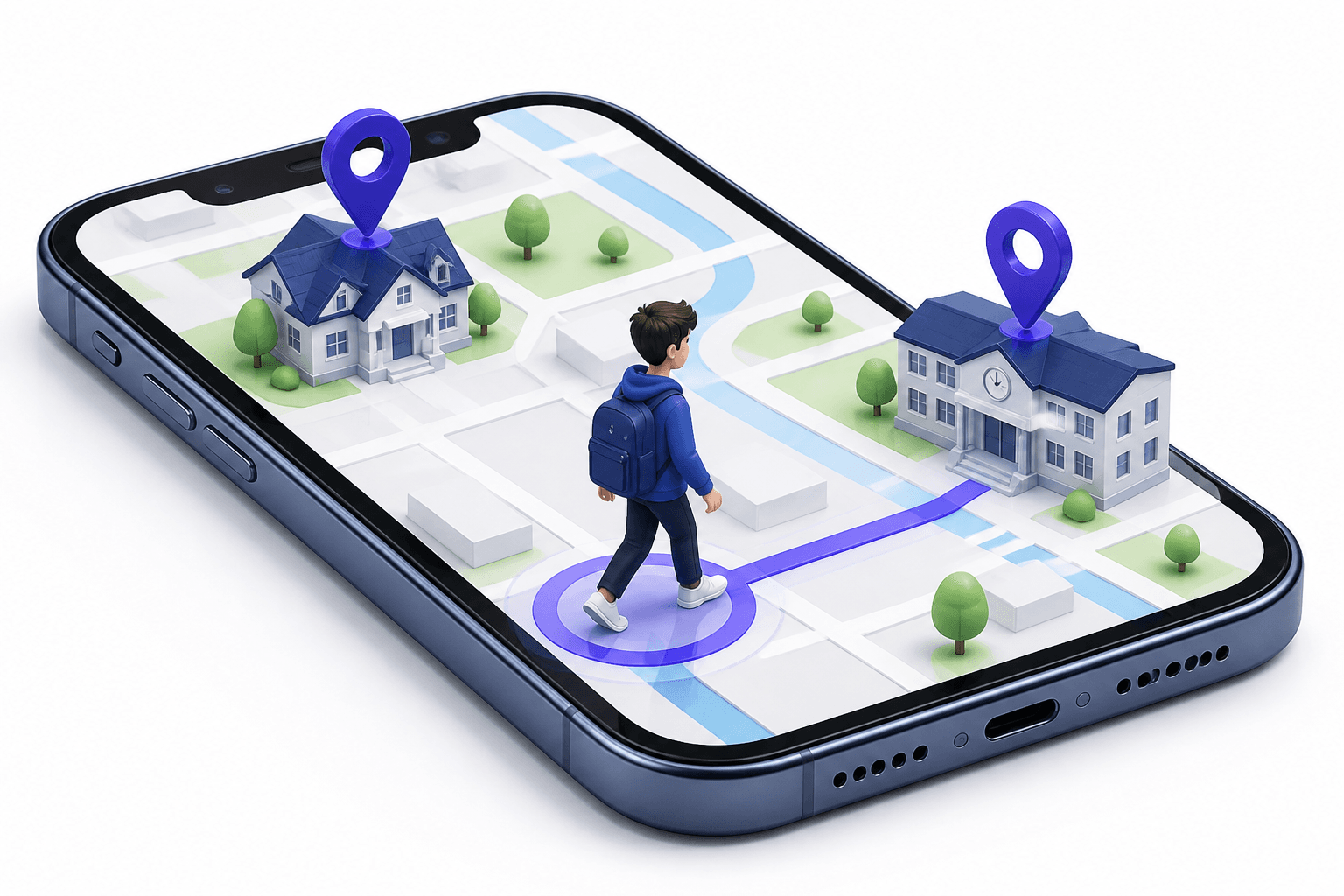
Arrival ping
Place-based
Exact or area
Your choice
Time-limited share
Windows
Private mode
Off the map
One household plan
Unlimited
A missed ping is not a crisis script
The failure mode of check-in tools is not 'the app lied.' It is the household treating silence as evidence. Low battery, airplane mode, a dead zone, a teenager who turned sharing off because they were in a movie — all of those look like a blank map. If your first move is to imagine a crash, you will burn the trust that made sharing possible. Call. Text. Check the last known battery alert if you use one. Then decide whether this is a logistics night or an emergency night.
- Agree out loud who sees whom, and which places get alerts.
- Keep sharing off for people who did not opt in — including kids who were never asked.
- Treat a missed arrival as 'phone state unknown' before you treat it as harm.
- Do not stack three locator apps. One map the household will open is enough.
Windows beat a forever live map
Always-on sharing is one setting. It is not the only honest one. A commute window, a weekend trip, a 'until I get home' timer — those match how families already talk. A teenager who can end a share when they are home for the night is more likely to turn it back on tomorrow. A partner who can drop to general area instead of a street pin is more likely to keep the household in the loop without feeling watched in the supermarket aisle.
Private mode exists for the hours that are nobody else's business: a medical appointment, a job interview, a walk you did not announce. If the product cannot go private without a fight, it will get uninstalled. If it can go private and still send an arrival when someone chooses to, it can replace the thread without replacing judgment.
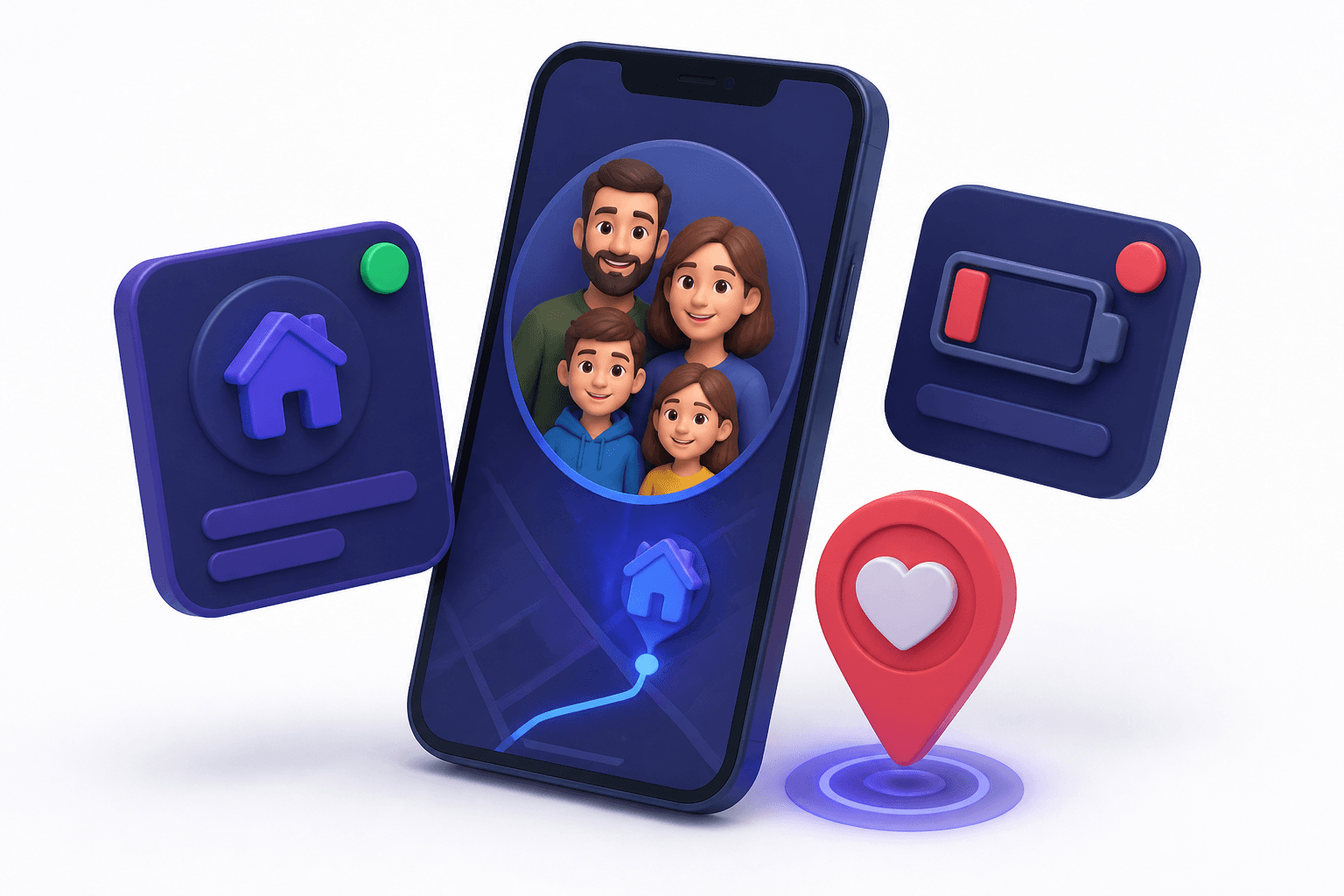
How HeyPolo currently frames arrivals
HeyPolo is a family locator from the Surfshark team. As they currently document it, sharing can be exact location, a general area, or private mode; it can be time-limited, repeating, or always-on; and arrival alerts sit next to low-battery pings, SOS (a family location ping — not 911), and optional speed monitoring. One plan covers unlimited members on iPhone and Android. Listed prices at writing are about $3.99/month billed annually ($47.88) or $5.99/month, with a 3-day trial on monthly and a 7-day trial on annual as currently advertised, plus a 30-day money-back window. Store pages they point to show 4.9 ratings — those are store scores, not a GUIDEORA lab.
HeyPolo currently says it does not sell location to advertisers. That is their documentation, not a forever certificate from us. Read the live privacy page before you pay. Checkout always wins if a card on this site disagrees with the cart.
Check-in styles — pick the loop, not the loudest map.
| Style | What it solves | What it costs you | GUIDEORA note |
|---|---|---|---|
| Group-chat 'you home?' | A human reply | Nagging and delay | Fine for rare nights |
| Arrival alert at labeled places | The same loop, automated | Phones must stay sharing | Best default for a household that agreed |
| Always-on live map | Curiosity all day | Fatigue and mute | Use a window if you can |
| No share at all | Privacy by default | You still text | Correct for anyone who did not consent |
Pros
- +Arrival alerts can retire the same question without a live feed
- +Time-limited and general-area modes match how people already negotiate
- +One household plan avoids per-person locator fees as HeyPolo currently lists it
Cons
- −A missed ping is still a phone and radio problem first
- −Alerts are not proof of safety and not a 911 substitute
- −If nobody agreed to share, the app is the wrong tool
When to keep the thread anyway
Keep texting when the question is not location — it is mood, delay, or a change of plan. Add arrival alerts when the household is tired of asking the same geographic question and everyone on the map said yes. HeyPolo is the product this site uses as the consent-based example. Confirm trial length, annual versus monthly, and the money-back window on checkout. GUIDEORA does not run the map.
Editor take

Retire the question, keep the conversation
Use arrival alerts when the family already agrees that home and a couple of other places are worth a ping. Keep the group chat for the human part: running late, changing plans, needing a ride. Do not treat a quiet map as proof of safety. GUIDEORA is not HeyPolo.