
family safety guide
SOS Buttons on Phones: A Location Ping Is Not a Substitute for 911
 Sam Okonkwo· Security Researcher· Updated August 27, 2026· 14 min read
Some links on this page may earn GUIDEORA a commission. Disclosure

Quick take
A locator SOS is typically a location ping to people you already share with. It is not a substitute for 911 (or your local emergency number). iPhone Emergency SOS and Android emergency shortcuts can contact dispatch — that is a different stack. HeyPolo currently includes SOS as a family-map feature. Teach everyone in the household which button does which job before anyone is scared.

Marketing loves one red button. Physics does not.
Safety apps draw a red control and imply that help is on the way. Sometimes 'help' means your sister gets a map pin. Sometimes it means the local emergency number starts a call. Those are not the same product. If you only remember one line from this page, remember that a family location ping is not 911. Minutes matter. Myths waste them.
Apple's Emergency SOS and similar Android emergency features are operating-system tools that can contact emergency services and share location with dispatch where the phone and local system support it. A third-party family map sits on top of the OS. It can notify the circle you built. It cannot become a public-safety answering point because you paid $3.99 a month.
From the record
If you need an ambulance, you need dispatch. If you need a ride from the parking garage, you need a family ping. Label the buttons in your head before you need either.
GUIDEORA SOS rule
911
Local emergency number — still the danger path
Family SOS
People you already share with
OS SOS
Phone feature, not the locator brand
What a family SOS is good for
A family SOS is for 'I need the people on my map to see me now.' Walking to a car in a dark lot and feeling uneasy. A hike where you twisted an ankle and you want your partner, not a lecture about whether it was 'real enough' for dispatch. A situation where you want witnesses from your household. Those are real. They are still not a fire, a chest-pain emergency, or a violent crime in progress — those go to 911 or the local equivalent.
The ping only works if the people on the other end have their phones, have notifications on, and are in a position to help. A parent in a meeting, a sibling on a plane, a partner who muted the app — the red button did not fail the universe. It failed the assumption that family is a 24/7 dispatch center.
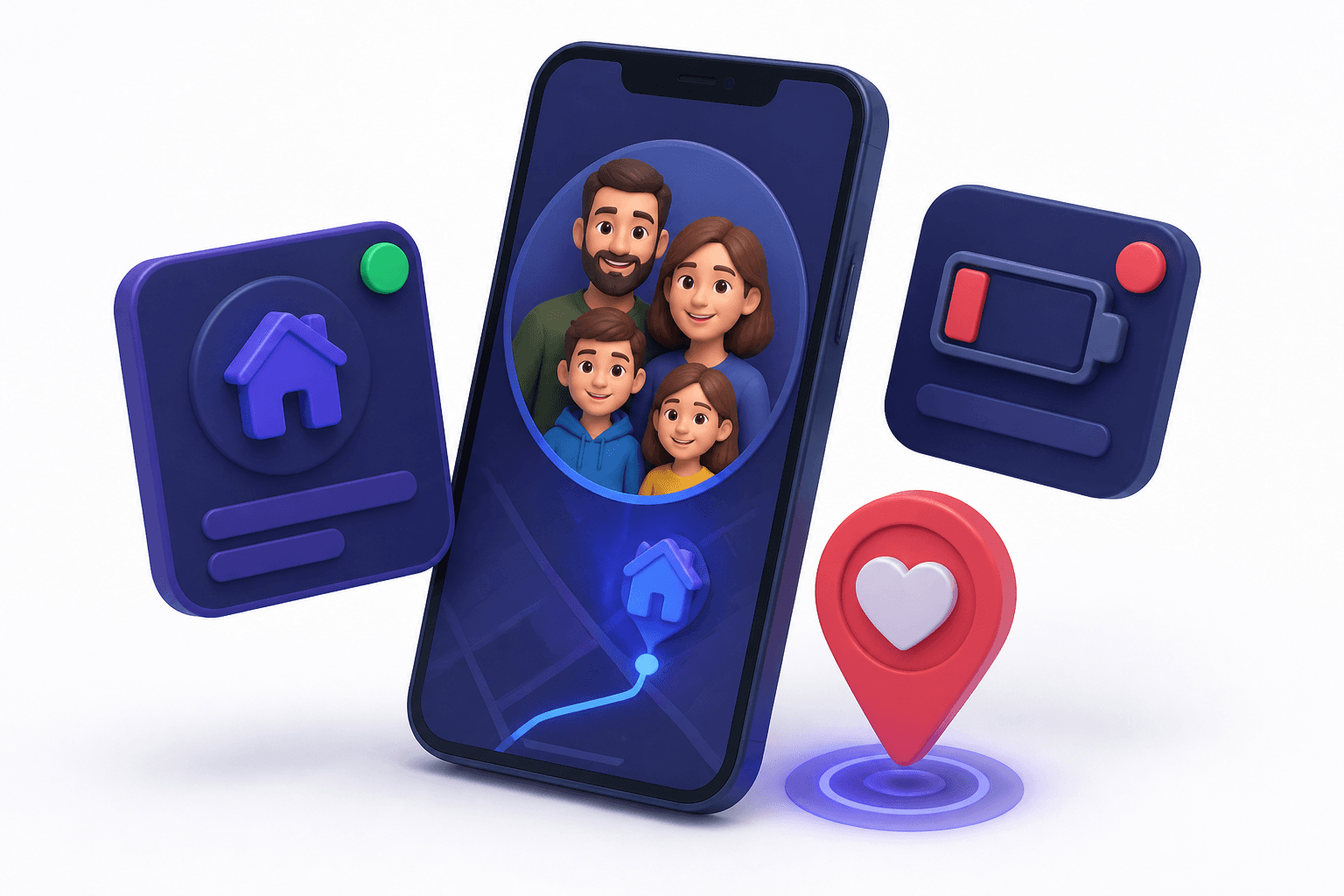
Family SOS
Ping relatives
911 / local
Dispatch
Phone Emergency SOS
OS feature
Needs network
Limits
Practice first
Calm day
What 911 (and local emergency numbers) are for
Emergency numbers exist because trained operators route police, fire, and medical. Your locator vendor is not in that chain. Life360 and other stacks may add crash detection that attempts an extras path — still not a reason to skip dispatch when you can call. If you cannot speak, the phone's own Emergency SOS flow is the one to have practiced, not an in-app control you have never opened.
A ten-minute drill that is not theatrical
- Each person: show where 911 (or local emergency) is dialed, including lock-screen emergency.
- Each person: show the phone's Emergency SOS / emergency shortcut if the OS has one.
- Each person: show the family-map SOS and who will receive it.
- Say out loud: family SOS is not dispatch.
- Confirm sharing is consented. An SOS from a map nobody agreed to is still covert tracking.
HeyPolo SOS as currently sold
HeyPolo currently lists SOS among household features on a consent-based map (exact / area / private; timed or always-on; arrivals; low battery; speed). Built by the Surfshark team; they currently document not selling location to advertisers. Unlimited members; iPhone and Android; about $3.99/mo annual ($47.88) or $5.99/mo; 3-day / 7-day trials as advertised; 30-day money-back; store 4.9 as they advertise. Treat SOS here as a family location ping. Confirm behavior in the live app — GUIDEORA does not operate emergency services.
Life360's safety extras (crash detection, roadside, and more) are a larger stack. If automatic crash extras are the job, compare that product honestly. Do not import those extras into HeyPolo in your head. Checkout always wins on price.
Match the danger to the number — not to the reddest icon.
| Situation | Family SOS ping | Phone Emergency SOS / 911 | GUIDEORA note |
|---|---|---|---|
| Need a ride / 'come find me' | Yes | Usually no | Household logistics |
| Chest pain, fire, violence | Optional extra notify | Yes — first | Do not wait on family |
| Crash extras you subscribed to | Depends on vendor | Still call if you can | Life360-class stacks differ |
| No network | May fail | May fail | Neither is magic |
Pros
- +A practiced family ping can shorten 'come find me' time
- +Separating SOS from 911 keeps minutes for real dispatch
- +Consent-based maps avoid surprising someone with an emergency audience they did not pick
Cons
- −Family is not a public-safety answering point
- −No network, no ping
- −A red button does not add crash detection HeyPolo does not sell
Teach the difference once
Put 911 in muscle memory. Put family SOS in the locator you actually agreed to use. HeyPolo is the family-map example this site features. GUIDEORA is not 911, not HeyPolo, and not Life360.
Editor take

Call dispatch for danger; ping family for 'come find me'
Keep the jobs separate. HeyPolo's SOS is the family-ping example this site uses — not emergency dispatch. Confirm how it behaves in the live app. GUIDEORA is not a public-safety agency.