
family safety guide
When a Phone Goes Quiet: Low Battery Alerts vs Assuming the Worst
 Priya Shah· Consumer Finance Editor· Updated August 27, 2026· 13 min read
Some links on this page may earn GUIDEORA a commission. Disclosure

Quick take
Most quiet maps are battery, coverage, airplane mode, or someone who turned sharing off. A low-battery alert gives the household a non-catastrophic story before the phone dies. It cannot ping you after the battery is already at zero, and it is not 911. HeyPolo currently includes low-battery alerts on a consent-based map. Use them as logistics. Do not use them as proof of harm.

A blank map is usually a battery story
The live map stops. The last pin is twenty minutes old. The group chat has not replied. The story your nervous system writes is a crash. The story that is statistically ordinary is 8% battery, a streaming playlist, and a pocket that got warm. Families that skip the ordinary story burn trust. Families that only believe the ordinary story will miss a real emergency. You need a script, not a vibe.
Silence is 'unknown,' not 'harm.' Unknown is still stressful. Naming it keeps you from turning a locator into a panic machine. A low-battery alert is one way to shrink unknown: you get a ping while the phone can still speak.
From the record
Assume a charger problem until you have a reason to assume a person problem. Then use a phone call, not a zoomed-in map history, as the next step.
GUIDEORA rule for quiet phones
Before 0%
The alert has to fire while the phone still lives
Unknown
Default meaning of a blank map
Call
Still the human next step
What a low-battery alert can and cannot do
The feature is simple: when the sharing device crosses a battery threshold, the other people on that share get a notification. You learn that the phone is about to disappear from the map for a boring reason. You can text 'plug in' instead of 'where are you, we are scared.' That is a real household improvement. It is not a medical monitor and not an airbag.
Once the phone is dead, the alert cannot follow up. Last-known location may remain on the map depending on the product. That pin is a history, not a live person. Do not navigate to a last-known coffee shop as if it were a beacon. Call. If you have a genuine reason to fear harm, use 911 (or your local emergency number), not an in-app SOS that only pings relatives.
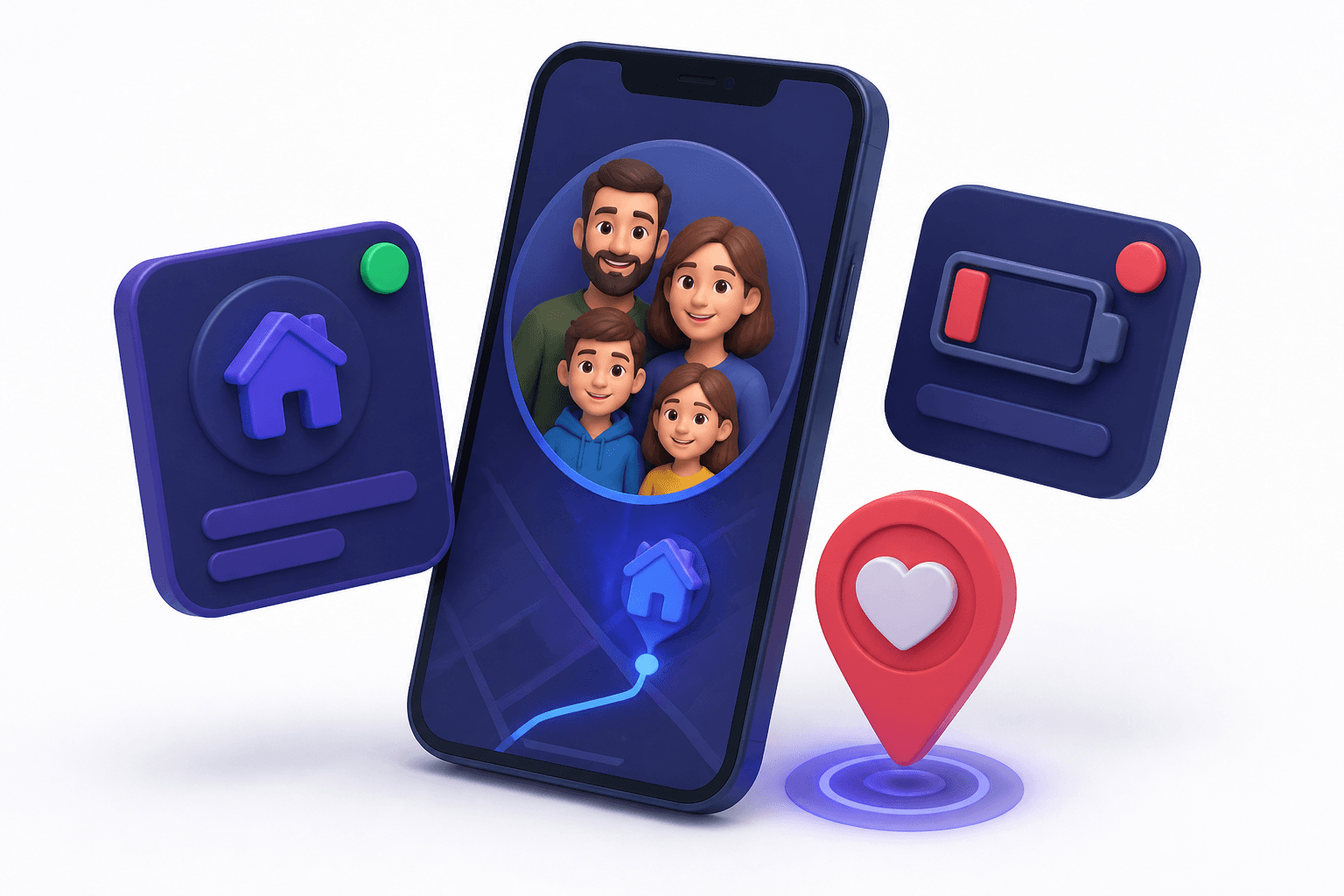
Low-battery ping
Before zero
Not after death
Limits
Quiet ≠ crash
Default
Charger in car
Still first
Consent map
Required
A calm-night script beats an adrenaline script
- If a low-battery alert fires: text a charger reminder, then wait the time you already agreed.
- If the map goes blank with no battery ping: send one text, one call. Do not fill the thread with theories.
- If they said they would be at a place and a trusted person can check that place, that is logistics — not a stakeout.
- If you have specific reasons to fear immediate harm, call emergency services. A family map is not dispatch.
- Afterward, talk about power banks and car chargers, not about loyalty.
Limits you should expect
Alerts need a network. A basement, a plane, a festival dead zone — the ping may not leave. Battery percentage on iOS and Android is a system number the app reads; it is not a laboratory fuel gauge. Aggressive background-app killing on some Android skins can delay sharing and alerts. None of that is a conspiracy. It is phones.
HeyPolo's place in this stack
HeyPolo currently includes low battery alongside arrival alerts, speed monitoring, and SOS-as-family-ping on a map with exact / general area / private sharing. Surfshark team; currently documents no location sale to advertisers; unlimited members; iPhone and Android; about $3.99/mo annual ($47.88) or $5.99/mo; trials 3-day / 7-day as advertised; 30-day money-back; 4.9 store ratings as they advertise. Checkout always wins.
Life360's broader stack may include other device and driving extras. If you wanted crash detection, say that out loud and compare. For the narrow job 'tell us the phone is about to die,' a low-battery alert on a consented map is the feature. HeyPolo is the example this site uses.
Quiet-phone stories — start at the top unless you have a reason not to.
| What you see | Ordinary explanation | Next step | Not this |
|---|---|---|---|
| Low-battery alert | Phone is dying | Charger text | Not a crash |
| Blank map, no ping | Dead, off, or no signal | One text, one call | Not a documentary |
| Private mode | They paused sharing | Respect the rule you wrote | Not 'lying' |
| Specific fear of harm | Unknown and urgent | 911 / local emergency | Not in-app SOS as dispatch |
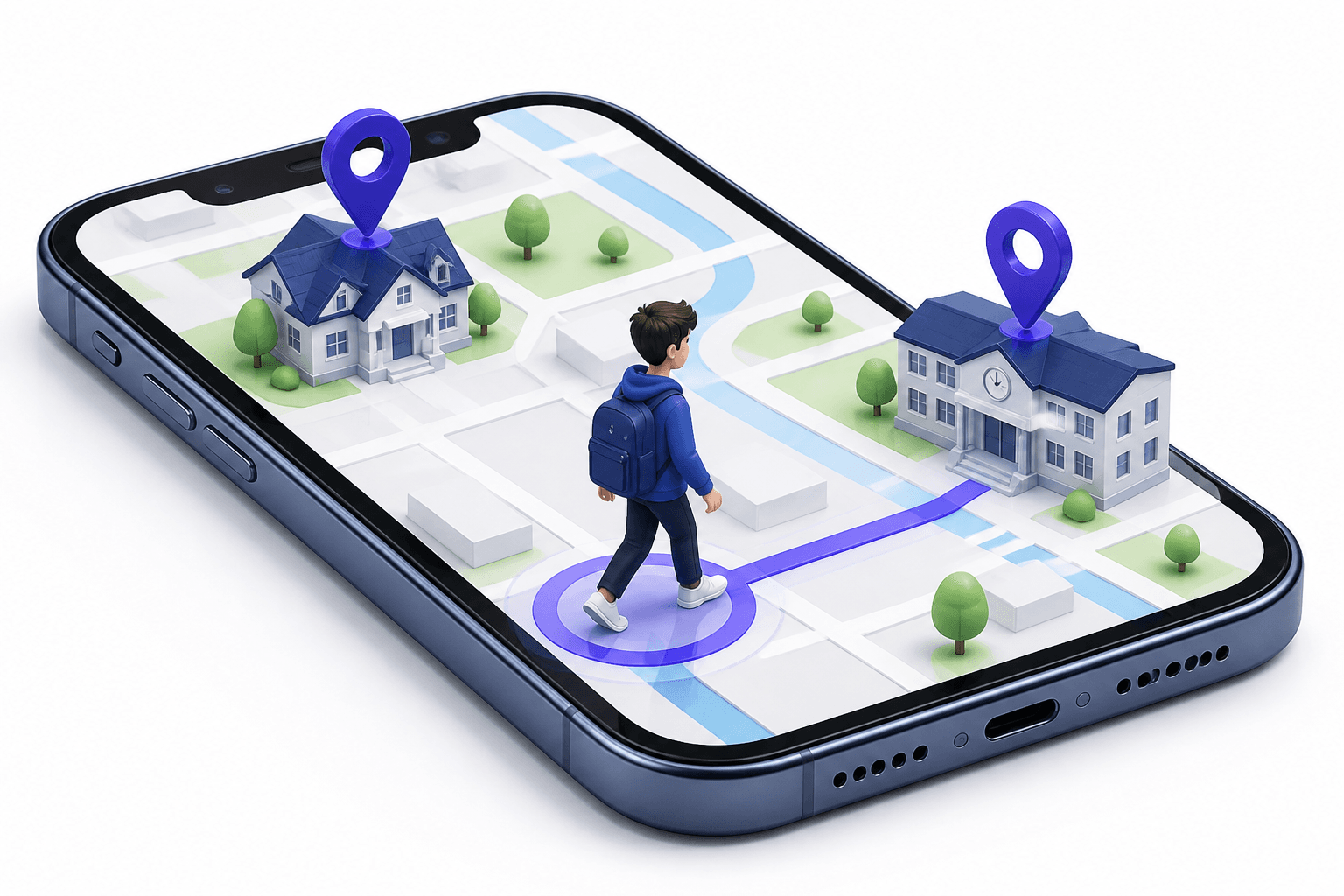
Shrink unknown; do not invent a disaster
A low-battery alert is logistics. Pair it with a charger and a script. HeyPolo currently ships that alert on a privacy-shaped family plan. GUIDEORA is not the vendor and will not tell you that a quiet map means someone is hurt.
Editor take

Plan for a dead battery like you plan for traffic
Turn on a low-battery alert if the household already shares by consent. Keep a charger in the bag. Treat silence as 'phone state unknown' until you have a reason not to. HeyPolo is the example this guide uses. Confirm the feature and price on checkout.